What we teach people to do with AI, we build here with our own hands.
Zero-G Studio is the studio of Valerio Barbagallo. Here AI isn't something to talk about: it's used to build things that work. Then the studio teaches how to do it to people who have never written a line of code.
The 3D world didn't start on this device: below you'll find the same content.
SaaS and business · Online
PrePiz
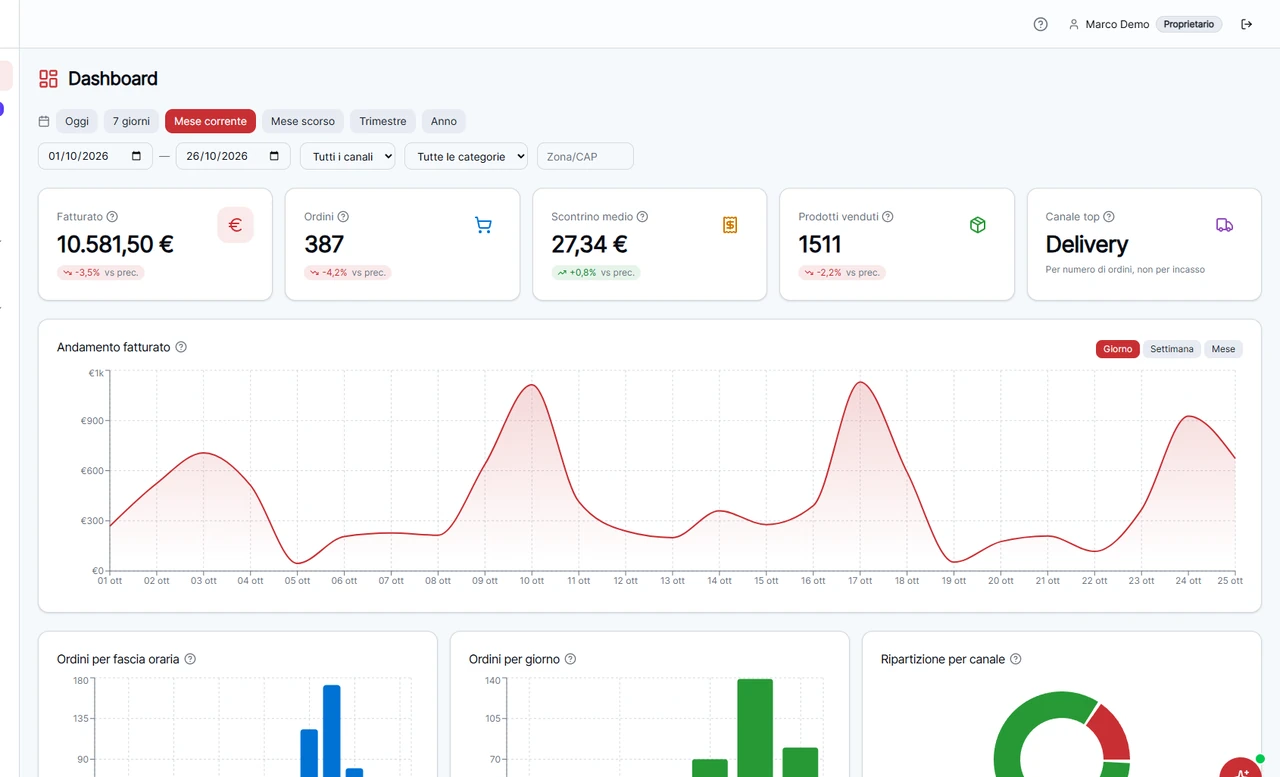
The analytics platform for pizzerias: sales and invoices turn into answers — costs, margins, customers.
An analytics platform for pizzerias and quick-service restaurants. It reads the sales from the till and the suppliers' e-invoices and turns them into answers: what each dish costs and earns, which customers come back and which are drifting away, where it pays to save.
Read all about PrePiz
Your pizzeria's numbers, finally clear
Every pizzeria already has the data it needs: the sales recorded by the till and the suppliers' e-invoices. Usually, though, they just sit there, scattered. PrePiz brings them together: you upload sales and invoices, and the numbers add themselves up. The only thing to type in by hand, just once, is the recipes.
The cost of each dish follows real prices. When an invoice arrives, ingredients are updated and the margin is recalculated. The menu is read by what it really earns, customers by what they do, the city by areas and distances. For any question there's the Copilot, an assistant that answers in Italian about your numbers.
PrePiz doesn't replace the till or the management software: it works alongside the ones the restaurant already uses. It was built together with people who run a pizzeria every day, on the data of a real restaurant.
What it does
Costs and margins: what each dish costs at the latest invoice prices, and how much you make on it.
Menu: which dishes to keep, which to push, which to rethink.
Customers: who comes back, who is new, who hasn't ordered in months.
Areas: where customers come from and what each neighbourhood is worth.
Suppliers: price increases flagged as soon as the invoice arrives, and where it pays to negotiate.
Copilot: ask questions in Italian and get answers about your data.
The collectible card game of ancient Rome: 40-card decks, duels in the Colosseum. Free, in the browser.
Video made with the help of artificial intelligence.
A turn-based strategy collectible card game. Legions, gladiators, senators and gods become cards to collect and deploy: every match is a turn-based duel, and whoever brings the opposing Leader's Lives to zero wins. A ten-chapter campaign, ranked matches, a city to explore. Free, in the browser, in eight languages. In Early Access.
Read all about Roma TCG
Conquer Rome, one card at a time.
Step into the arena with a 40-card deck. Legionaries, gladiators, senators and gods fight for you: every turn you decide whom to deploy, which spell to cast and where to hide a trap. Units attack and defend, spells change the field in an instant, traps stay face down until your opponent falls for them, and terrains change the rules for both sides.
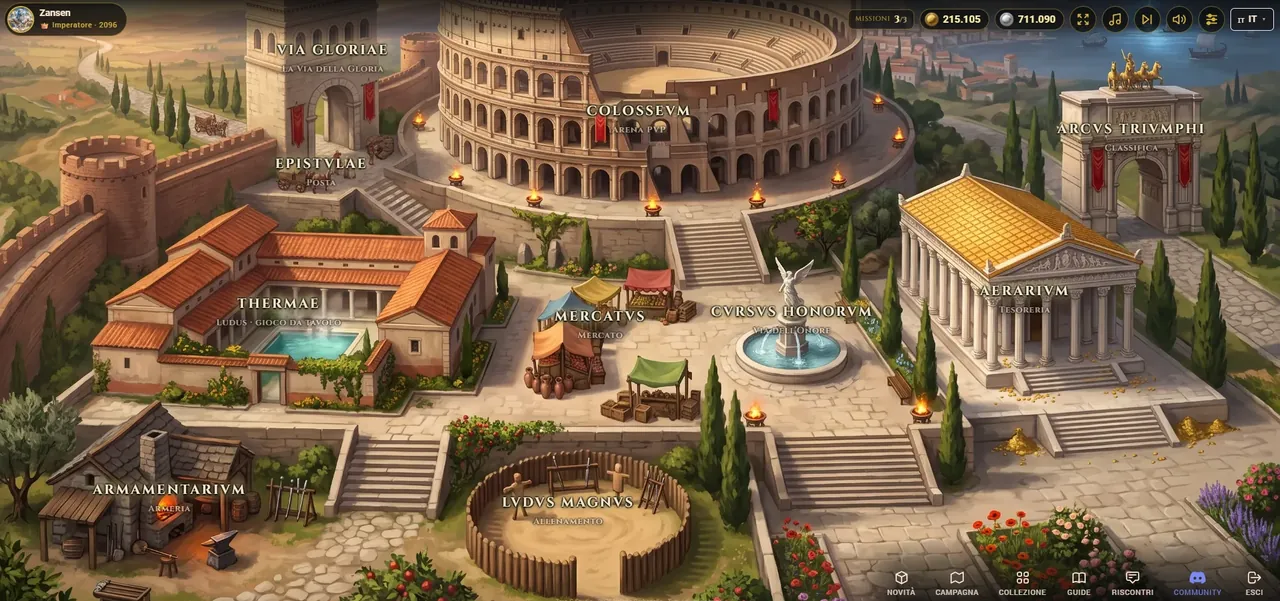
In the Colosseum you take on other players in ranked matches and climb the season's leaderboard. On the Path of Glory you cross the history of Rome in a chapter-based campaign, with purpose-written battles and bosses to bring down. At the Ludus Magnus you train against the computer.
The game is a living map of Rome: at the Market you find packs, at the Armoury you build decks, at the Baths you play Ludus Latrunculorum, the legionaries' ancient board game. And it's free to play, without even an account to try it: Sestertii can be bought but aren't needed to play, and the odds of every pack are published, card by card.
What you'll find
Over 350 cards in six rarities, two factions (Senate and Gladiators) plus neutrals, one Leader per deck.
Colosseum: seasonal ranked play, with the Cursus Honorum as the pass.
Path of Glory: the ten-chapter campaign, from the Caudine Forks onwards.
A city to live in: Market, Armoury, Baths, Arch of Triumph.
Eight languages, card texts included; on computer and phone, it installs as an app from the browser.
Free and fair: published odds, bots always flagged, no random packs where the law bans them.
How it's made (for the technically minded)
A single rules engine, in the browser and on the server: the server is the referee and can't be bypassed.
Cards are data, not code: a new card is added without touching the engine.
Over 3,000 automated tests before every release; tested with 1,000 simultaneous players, 33 ms response times.
Some of the illustrations are made with generative artificial intelligence tools, under the direction of the author, who selects and reviews them.
Mandatory training under every regulation, under control: deadlines, alerts, a file ready for inspections.
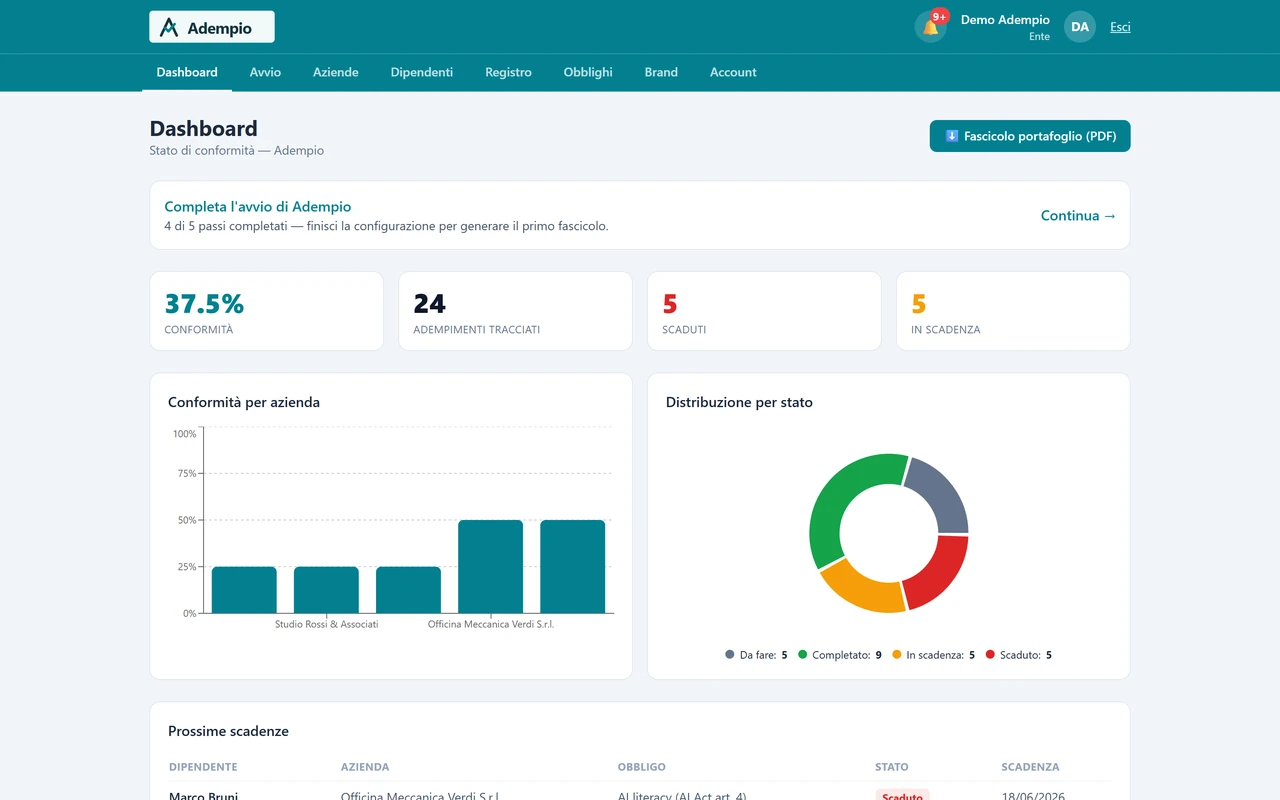
The register of mandatory training. Who has to do what, by when, and how to prove it: Adempio keeps the register (employees by obligation — workplace safety, GDPR, the AI Act and other regulations), sends alerts 60, 30 and 7 days before each deadline, and keeps the file with verifiable certificates, ready for inspections. And you're compliant.
Read all about Adempio
Train, track, prove.
Every company has training obligations coming from different regulations — workplace safety, GDPR, the AI Act — and most keep track of them in an Excel sheet, until an inspection asks them to prove everything, right now. Adempio does three things, and does them all the way: the Register says who has to do what and whether they're compliant or overdue; alerts arrive 60, 30 and 7 days before the deadline; the File gathers certificates with a verifiable digital signature, ready to show.
It's designed for those who manage training for other companies — training providers, consultancies, health and safety officers — and it works under your own brand: each provider uses it with its own logo, on its own clients. If you already have training management software that does all this, you don't need Adempio; if your clients' deadlines live in a spreadsheet, it's made exactly for you.
What it does
Register: employees by obligation, with compliant/overdue status at a glance.
Deadlines: automatic alerts at 60, 30 and 7 days.
File: PDF certificates with your brand and a verifiable digital fingerprint.
Multi-regulation: safety, GDPR, the AI Act and beyond — not just Italy's workplace safety law (Legislative Decree 81/08).
White-label: each provider manages its companies under its own brand.
A modern 3D character lost inside a '90s game. The studio's first published title, free on itch.io.
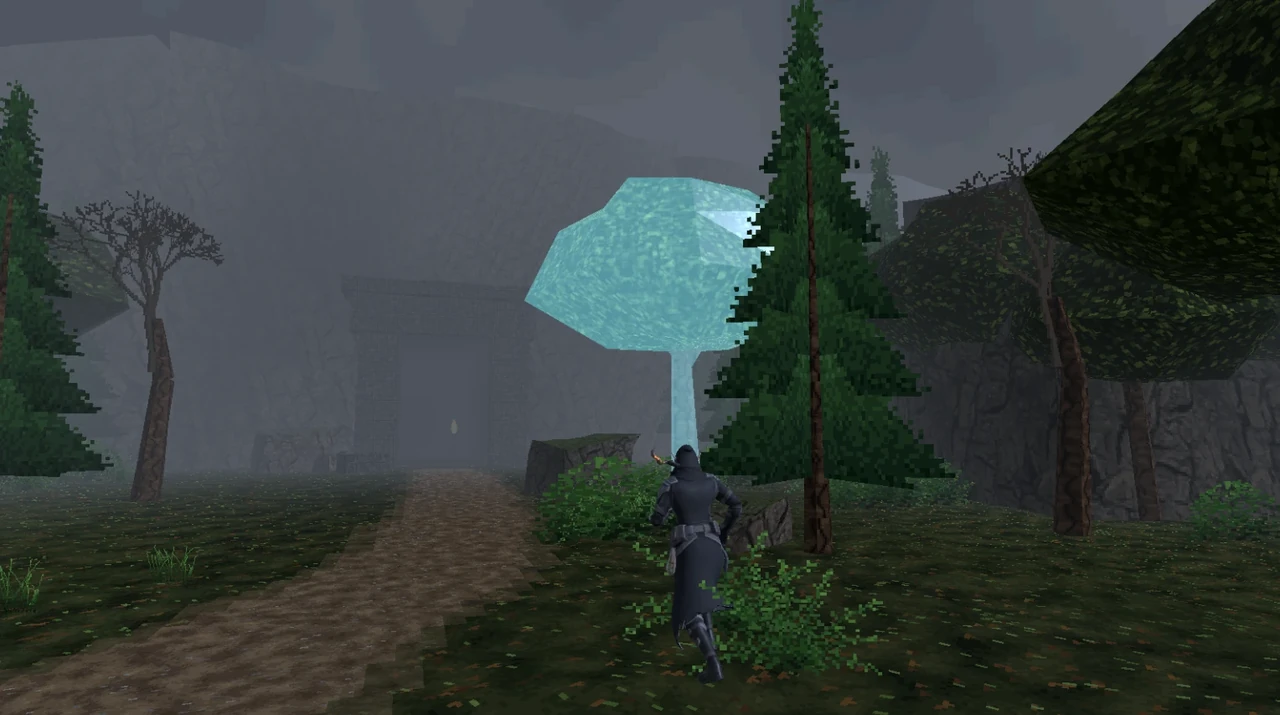
A third-person adventure in PS1 style. A next-gen character ends up inside an old '90s video world and has to find the way home: a tomb to explore, puzzles, platforms and three portal fragments to bring back together. Twenty to thirty minutes of play, free, on itch.io.
Read all about GLITCH
The right place, the wrong graphics.
GLITCH starts with a mistake: a modern 3D character, detailed and smooth, wakes up inside a game that isn't theirs — grainy textures, hard edges, fog at twenty metres. A '90s video world. To get home they have to get through a tomb in proper style: levers, platforms, a rolling boulder, walls to climb and three portal fragments hidden in its wings.
It's a short, complete adventure — twenty to thirty minutes — built with love for the PS1 era and its tricks, right up to the final scene, where the graphics... well, that you have to see.
It's also Zero-G Studio's first published game: it's free, and at the end there's a question for the players — do you want chapter two?
What awaits you
A '90s-style tomb: a clearing, a hub with the portal and three wings to explore.
Environmental puzzles: levers, platforms, climbing and a boulder you shouldn't trust.
Three portal fragments to get back home — and an ending with a twist.
Free on itch.io, for Windows. If you like it, say so: the sequel depends on the players.
A personal voice assistant, built in-house: it listens in Italian, answers, and controls the computer.
The studio's voice assistant. It lives on the computer, listens in Italian even without a connection, answers with a voice of its own and can get its hands on the machine: dozens of actions, from opening programs to managing files. It's Zero-G Studio's personal lab for AI that acts, not just chats.
Read all about Aria
An assistant that doesn't live on a web page.
Aria is the assistant the studio built to fit its own needs: an app that lives on the computer, with a holographic interface all of its own. You speak to it in Italian — speech recognition runs locally, even offline — and it answers out loud and gets things done: around seventy-five actions controlling the PC, from programs to files.
It wasn't made to be sold: it was made because it was needed, and it became the studio's testing ground for everything about AI that acts — voice, memory, autonomy, limits. Much of what the studio teaches in its courses and puts into its other products went through here first.
How it's made
Desktop app (Electron) with a WebGL holographic interface.
Local Italian speech recognition, even without a connection.
A natural answering voice and ~75 actions to control the computer.
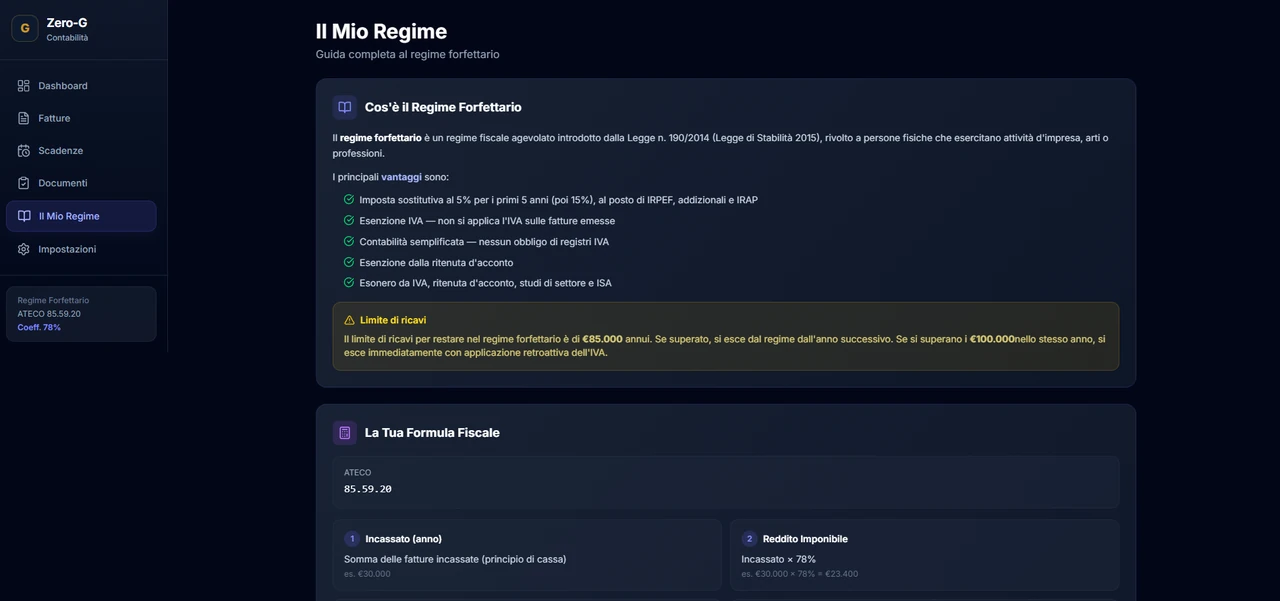
The studio's digital accountant: it does what an accountant does, and the data stays on your computer.
The digital accountant. It does what an accountant does for people on Italy's flat-rate tax scheme (the regime forfettario): invoices, taxes, social security contributions and deadlines, all explained in plain Italian rather than bureaucratese. The studio built it for its own VAT number and uses it every day — and the data stays on the computer, not on someone else's server.
Read all about Zero-G Contabilità
The flat-rate scheme, without the flat-rate anxiety.
For the self-employed on the flat-rate scheme, bookkeeping is simple on paper and full of traps in practice: deadlines, advance payments, contributions, limits not to exceed. Zero-G Contabilità comes from the first-hand experience of someone who lives under the flat-rate scheme, and does an accountant's job: it keeps the books, prepares the picture of taxes and contributions, and flags every deadline before it becomes a problem. With one deliberate choice: the data lives on your computer.
It's the tool the studio uses to run its own VAT number, every day. If you're curious, write to us.
What it does
Invoices: issuing and archiving.
Taxes and contributions: how much to set aside and when to pay.
Deadlines: the flat-rate scheme's tax calendar, with reminders.
A comic turn-based RPG: fruit and vegetables armed to the teeth defend the house from the advancing Rot.
A comic turn-based RPG in a giant house. You recruit a squad of armed fruit and vegetables — the sniper blueberry, the armoured broccoli, the chilli pepper that sets everything on fire — and lead them into battle against the Rot, advancing room by room. Cartoon on the outside, tactical on the inside, with more heart than it looks.
Read all about Maturi
The house is giant. You are small. The Rot won't wait.
In Maturi the world is a house seen from blueberry height: the Vegetable Garden outside the window, the Fridge with its frost glaciers, the Barbecue that's basically a volcano. Every room is a biome, every biome has its dangers and its boss, and at the far end the Rot keeps advancing, corrupting everything it touches.
Your defence is a squad of fruit and vegetables armed to the teeth, in cartoon style: every champion has their own role, personality and lines. Combat is turn-based — you think, you combine, you land the right blow at the right moment — and between battles you recruit, equip and explore.
It's a comic game that takes only two things seriously: tactics and its characters.
What awaits you
A whole house to cross, biome after biome, each with its own climate and its own boss.
A cast of fruit-and-veg champions to recruit, each with their own role and personality.
Turn-based squad combat: positioning, combos, special moves.
A cartoon style readable at first glance, written to make you smile.
In production. The first gameplay images are coming soon.
AI and tools · In-house tool
Acchiappa Idee
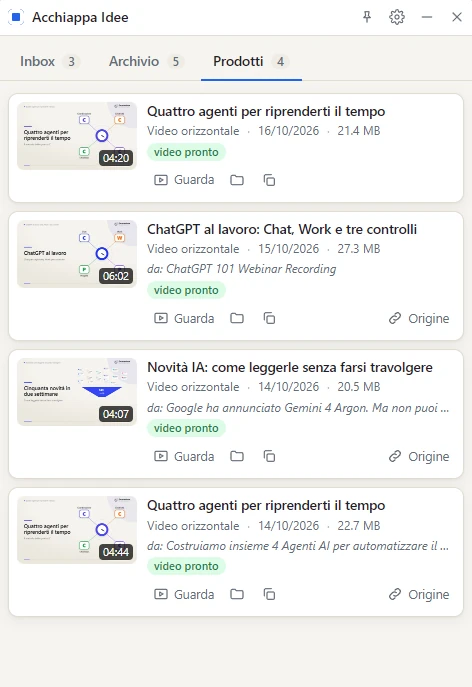
It captures a video from the web, studies it with AI and turns it into original teaching material: a lesson or a video.
The studio's content workshop. See a video with an idea worth keeping? Acchiappa Idee captures it, studies it with AI — speech and images — and turns it into original teaching material: an interactive lesson or a video, with graphics made from scratch. It studies the idea; it doesn't copy the content.
Read all about Acchiappa Idee
Ideas fly away. This app catches them.
Anyone who teaches knows it: the best ideas for a lesson come while watching a video at eleven at night, and by the next day they're gone. Acchiappa Idee — Italian for "idea catcher" — is the tool the studio built so as not to lose them: you capture the video, the app files it in the project, the AI listens to it and analyses it, and that idea becomes new teaching material — an HTML lesson or an animated video — with original content and graphics.
The principle is clear-cut: the original video is a starting point for study, never a source to copy. What comes out is the studio's own work, to be used in the classroom and in courses.
What it does
Captures and files the videos you care about, all in one project folder.
Studies them with AI: speech, structure, key ideas.
Produces original material: interactive HTML lessons or teaching videos.
Starts by itself when the PC boots, in a dedicated window: always within reach of an idea.
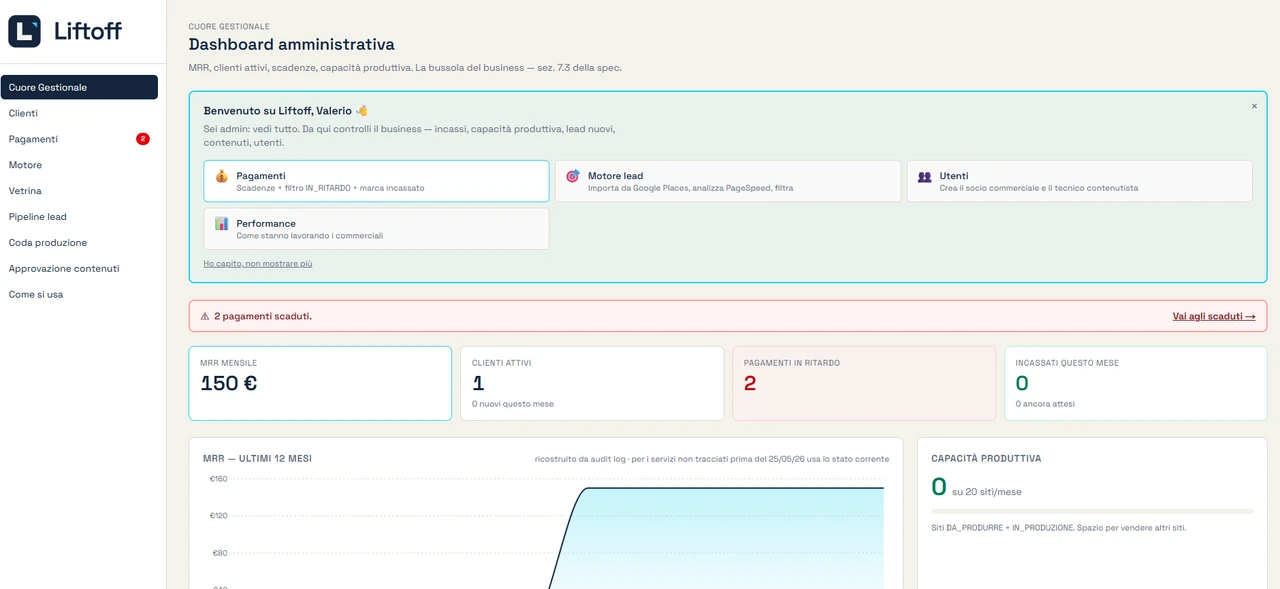
Lead generation, CRM and client management in a single tool: the management software the studio uses for itself.
Zero-G Studio's in-house management software. Finding clients, following them up and managing their projects — websites, SEO, social media — in one tool instead of three. The studio built it for itself and runs its business on it every day.
Read all about Liftoff
The shoemaker's software, with good shoes on.
Liftoff is the studio's answer to a problem of its own: selling and managing web services for small businesses meant juggling a sheet for contacts, management software for clients, and memory for everything else. Liftoff brings the three together in three spaces: the Engine finds and qualifies leads, the Showcase handles the sales side, the Heart manages clients and projects.
It's an in-house tool: it isn't for sale, but it's on display because it shows how the studio works — its software is born from real needs and put to serious use before being offered to others. If you're curious, or could use something similar, write to us.
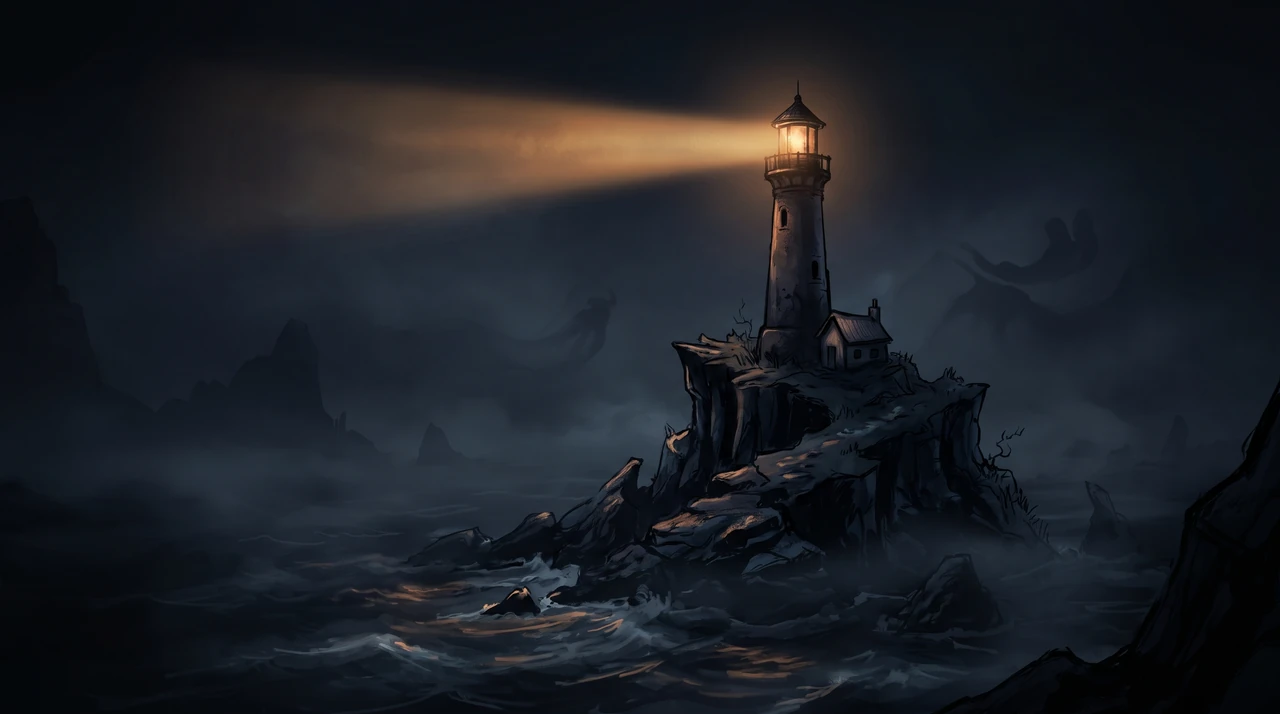
A co-op action roguelite: dive into the Tide that erases memories and bring them back to the lighthouse, before it goes out.
A co-op action roguelite in 2.5D, for 1 to 4 players. The world is drowned by a Tide that isn't water: it's oblivion, and it erases places, people and names. One lighthouse remains on a rock. You are a Guardian: you dive into the drowned lands to recover memories, and every memory you bring back rebuilds a piece of the village. Coming to Steam.
Read all about Misura
When the light fades, the world forgets.
On every expedition you choose a Guardian, a weapon and a Lantern, and dive into the drowned biomes. Upgrades are Memories — of childhood, of craft, of love, of war, of grief — and at the end of each biome comes the choice that decides everything: go back up and keep what you have safe, or dive deeper and risk it.
The mechanic that gives the light its meaning is the Lantern: the oil runs low, and as it does, the dark doesn't just hide things — the game forgets along with you. The map fades, enemies grow stronger. Exploring further pays more, but every step beyond costs light.
Between one dive and the next there's the lighthouse: the village is rebuilt memory by memory, the inhabitants come back one by one, and each has something to tell you that they didn't remember the time before.
In co-op the game changes skin: two Guardians' Memories enter Resonance and unlock combinations impossible alone, whoever falls stays on the field as a shadow that lights the way, and each player finds different fragments of the same story — which only comes together by talking it over.
One-off purchase, no in-game shop: replayability comes from the systems, not from content to sell.
What awaits you
20–40 minute expeditions: three biomes, bosses, and the choice between going back up or taking the risk.
The Lantern: light is a resource, and the dark has a short memory.
A hub village that really grows, building by building, inhabitant by inhabitant.
1–4 player co-op with Resonances, drop-in/drop-out and a story that only comes together as a group.
Weekly challenges and Pacts with the Tide for those who want to raise the bar.
In production, coming to Steam.
The studio
Zero-G Studio
Zero-G Studio is the independent studio of Valerio Barbagallo: the business software, AI tools and video games you have just met are made here — built for a real need, used every day in-house, then offered to others. The studio also teaches AI, with online and live courses, and builds websites for small businesses.
Artificial intelligence, actually put to work.
Zero-G Studio is the studio of Valerio Barbagallo. Here AI isn't something to talk about: it's used to build things that work. Then the studio teaches how to do it to people who have never written a line of code.
It builds
You have just met the studio's software along the route: Adempio for mandatory training, PrePiz for pizzerias. And the tools the studio uses for itself, every day: Aria, the AI agent that works as its assistant; Zero-G Contabilità, the digital accountant; Liftoff, the management software it runs its clients on; Acchiappa Idee, which turns a video into a lesson.
It plays
You have just met the games too: Roma TCG, a free collectible card game set in ancient Rome, and GLITCH. Two more are in production: Maturi, a comic turn-based RPG, and Misura, a co-op action roguelite: dive into the Tide that erases memories and bring them back to the lighthouse. In production, coming to Steam.
It teaches
Online courses on zero-g-studio.it, in Italian: AI al Lavoro, AI Officina, AI Cybersecurity, Power BI Lab Pro and Office 365. The first modules are open to everyone, no card required. And live courses on formazione.zero-g-studio.it, streamed live with the teacher, on the real tools and on your own cases.
For businesses
Websites for local businesses, each one designed around the client's identity: never the same template for two clients. Plus SEO and social media, to get found.
How we work
No slides: we build. In the courses you get your hands on the tools from the very first minute.
Us first. The studio's software is born from a real need and used every day before it's offered to anyone else. Liftoff, the software the studio runs its clients on, is one of them.
Open about AI. Wherever content is made with artificial intelligence, we say so: there's a page about it, and the labels sit on the content itself.
In numbers
A trainer since 2018.
1,875 classroom hours in the first nine months of 2026.
More than 1,000 hours devoted to artificial intelligence.
24 editions of the AI course.
30 years of graphic design and TV production behind it.
About us
Zero-G Studio is the studio of Valerio Barbagallo.
Valerio has been a trainer since 2018. In the first nine months of 2026 alone, training institutions entrusted him with 1,875 classroom hours, not counting private lessons. More than a thousand of those hours are devoted to artificial intelligence, with 24 editions of his AI course.
Before that came thirty years of graphic design and TV production. Valerio never studied programming: what he teaches people to build with AI, he built himself first, and he uses it every day. That's how the studio's software, its games and its client websites came about, one at a time, each starting from a real need.
That's also where the teaching style comes from: no slides, we build. In the courses he shows you the method he uses himself, on the same tools, starting from zero.
And the studio is open about AI: wherever content is made with artificial intelligence, it says so.
Try the first modules of a course for free, explore the software and the games, or write to info@zero-g-studio.it for a website or a tailor-made course.
Texts reviewed and approved by Valerio Barbagallo — October 2026
Zero-G Studio by Valerio Barbagallo · Italian VAT no. 18586011001